DAY 1: WELCOME TO PARO AIRPORT, TRANSFER TO THIMPHU
Welcome to Paro Airport in Bhutan for your eagerly anticipated trip to Bhutan from Pune. As your plane approaches the Paro valley, glance below to spot the Paro Dzong perched on a hill, overlooking the Paro Chu river along with Ta Dzong. Upon arrival, one of our representatives will greet you at the airport. En route to Thimphu, we’ll stop at Chojum to capture photos of the meeting point of two Bhutanese rivers, the Thumpu Chu and the Paro Chu. After reaching Thimphu, you will check into your hotel and have some time to refresh. The rest of the day is yours to explore Thimphu City. Enjoy an overnight stay at the hotel in Thimphu.
DAY 2 : FULL DAY THIMPHU SIGHTSEEING
Welcome to Paro Airport in Bhutan for your eagerly anticipated tour package from Pune. As the plane descends into the Paro valley, glance below to catch sight of the Paro Dzong perched on the hillside with the Paro Chu river and Ta Dzong nearby. Our representative will greet you at the airport, and during your drive to Thimphu, we will stop at Chojum for you to capture photos of the confluence of the Thumpu Chu and Paro Chu rivers. Upon arrival in Thimphu, you will check into your hotel and have some time to refresh. The rest of the day is yours to explore Thimphu City at your leisure. You will spend the night at the hotel in Thimphu.
Today marks the second day of your journey from Pune to Bhutan. After a long and tiring trip, you're likely to want some rest to recharge. Enjoy a pleasant morning in Thimphu as the sun gently warms the valley, and kick off your day with a cup of hot Suja, which is Bhutan’s traditional butter tea. This beloved beverage is made with one tablespoon of tea leaves, a block of butter, salt to taste, and one tablespoon of milk powder. It’s undoubtedly a revitalizing drink. Savor your tea, freshen up, and then proceed to your breakfast. After a hearty breakfast, get dressed and prepare to visit some of Thimphu's remarkable attractions, the capital city of Bhutan.
The National Memorial Chorten, commonly referred to as the Thimphu Chorten, serves as a location for evening prayers. This chorten was established in memory of the third King and is frequently circled by visitors who chant mantras and spin prayer wheels. The concept of building this landmark was initiated by Bhutan’s third King, His Majesty Jigme Dorji Wangchuk, known as the father of modern Bhutan. He envisioned creating a monument dedicated to worldwide peace and prosperity. Finished in 1974 following the King's untimely passing, it stands as a tribute to the late monarch and as a symbol of peace.
The Clock Tower, situated in the heart of Thimphu Town, is an architectural marvel that visitors can admire during their Bhutan tour. This tower is unlike any other structure in Bhutan. It is designed with four clock faces, each facing a different direction. The architecture reflects traditional Bhutanese style, featuring colorful paintings and intricate carvings on wood. The tower boasts many delicately carved floral designs, paintings, and depictions of dragons. The dragons on the tower are oriented towards each clock, providing an interesting sight. In Bhutanese culture, the dragon is a sacred animal and symbolizes the nation's independence.
Since this location is a key draw for both residents and tourists in Bhutan, a lot of individuals visit during the evening to appreciate the beautiful carvings and artwork. This tower is one of the most frequented spots in the area due to the many restaurants, shops, and hotels located nearby. The square can be found near various trade fairs, concerts, and other happenings. The clock tower and its vicinity sometimes feature live music events, creating a lively and energetic atmosphere. You can purchase gifts for loved ones at several retail centers around the area. There is also a small playground for children, which serves as a wonderful picnic location and an enjoyable evening pastime.
Sakyamuni Buddha - Located atop Kuensel Phodrang hill is the statue of the Great Buddha Dordenma. This 51.5-meter tall gilded bronze figure is sure to grab your attention, and the unobstructed view of the valley will surely captivate you. This location is often referred to as the Buddha Viewpoint.
Changangkha Lhakhang - In Thimphu, you'll find a number of monasteries and temples, but Changangkha Lhakhang stands out as the most significant religious site. This temple is dedicated to Avalokiteshvara, a symbol of compassion from the 15th century, making it the oldest in the area, where you can also take in stunning views of Thimphu valley.
Takin Zoo - Here, you can see Bhutan's national animal, the Takin. This species is one of the most endangered in the world, and it can only be found in Bhutan, where it is protected in its natural habitat.
Trashi Chhoe Dzong - Also known as the Fortress of the Glorious Region, this is another essential stop on any tour of Bhutan. Located on the west side of the Wang Chhu River, the Trashi Chhoe Dzong is the site of the formal coronation for the fifth King and hosts the annual Tsechu festival. Constructed in 1641 by Shabdrung Ngawang Namgyal, who unified Bhutan politically and religiously, this Dzong underwent reconstruction in the 1960s in accordance with traditional Bhutanese methods, without using nails or architectural plans. Spend the night at a hotel in Thimphu.
DAY 3 : THIMPHU TO PUNAKHA TRANSFER
As your Hot Ngaja, a sweet and creamy Bhutanese milk tea, arrives, take a moment to savor it while admiring the stunning valley from your room. After breakfast, set off for the Punakha Tour. Punakha, which once served as Bhutan's capital, is a serene escape from the bustling city life, situated at an altitude of 1200 meters. This elevation means mild winters and cool summers. The valley is renowned for its cultivation of Red and White Rice along the banks of the Pho and Mo Chu rivers. Along the way, stop for a visit.
Dochula Pass: This is an essential spot for travelers on any Bhutan itinerary originating from Pune. It is just about an hour’s drive from Thimphu city. While traveling to Punakha from Thimphu, this spectacular viewpoint can be found at 10,000 feet. On clear days, visitors can see a sweeping view of the snow-covered peaks of the Eastern Himalayas. Adorned with vibrant prayer flags, the 108 Chortens are the highlight of this location.
Druk Wangyal Chorten, also known as the 108 memorial Chortens at Dochula Pass, was constructed in 2005 under the directive of Bhutan’s Queen Mother, Ashi Dorji Wangmo Wangchuck. It serves to honor the valiant Bhutanese soldiers who lost their lives in 2003 due to Assamese insurgents. Therefore, this remarkable site should not be overlooked during your tour of Bhutan.
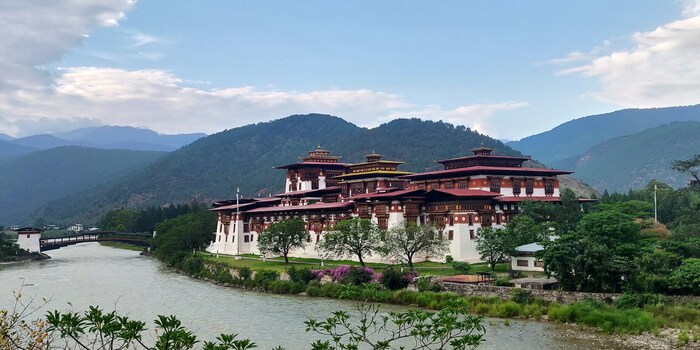
Punakha Dzong: Referred to as "The Palace of Great Happiness," Punakha Dzong is situated where the Pho Chhu (father) and Mo Chhu (mother) rivers meet in the Punakha–Wangdue valley. This Dzong is considered the most stunning among Bhutan's ancient fortresses, connected to the mainland by an arched wooden bridge that houses many priceless artifacts from the time when the kings ruled the kingdom from this valley.
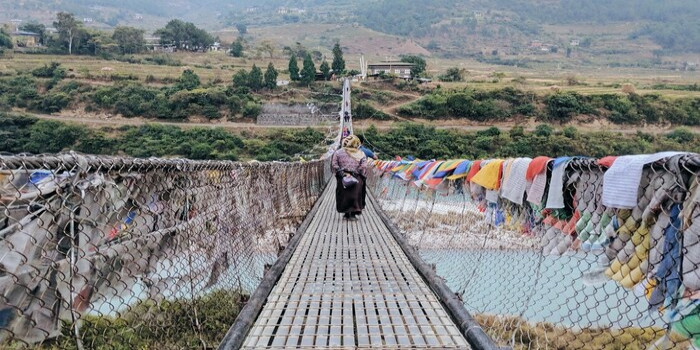
Suspension Bridge: This secret gem in the Punakha Valley links the surrounding area to the historical administrative hub of Punakha Dzongkhag. The entire bridge is draped in prayer flags, making it an ideal location for birdwatching and taking photographs.
Chimi Lhakhang (Fertility Temple): Perched atop a small hill, Chimi Lhakhang is dedicated to Lama Drukpa Kuenley. Known as the 'Divine Madman,' he is believed to have preached through songs, humor, and eccentric actions. The temple is renowned for its association with fertility, and many Bhutanese hold the belief that couples who cannot conceive will receive blessings from Lama Drukpa Kuenley if they visit the temple and pray for a child. The pathway leading to the temple is a scenic rural route that winds through rice fields, leading visitors to the temple, and after crossing the fields, a small stream marks the short ascent to Chimi Lhakhang. Spend the night at a hotel in Punakha.
DAY 4 : PUNAKHA TO PHOBJIKHA VALLEY, NIGHT STAY
As the sun illuminates the skies in the Land of Joy, awaken to a splendid morning in Punakha surrounded by tranquil nature. Enjoy a cup of steaming tea while taking in the beauty of the lush valley from the comfort of your bed before heading to Phobjikha Valley for breakfast.
Phobjikha Valley (3000 m): This destination is a paradise for those who appreciate nature and is an ideal spot for observing various birds, particularly the renowned Black Necked Cranes that migrate here. As one of Bhutan’s key wildlife sanctuaries, its unspoiled natural beauty offers a peaceful escape from the chaos of urban living, enhanced by the warmth of the cheerful locals, making this location truly worthwhile. Phobjikha Valley is the largest and widest in Bhutan, celebrated for its sweeping landscapes and tranquil environment that attract nature enthusiasts. Additionally, it fascinates adventure seekers eager to explore the trekking and hiking trails while immersing themselves in pristine nature. The valley is especially known for the rare and endangered Black Necked Cranes. Absorb the splendor of this magnificent valley and relish its peacefulness. Spend the night at a hotel in Phobjikha Valley.
Here are some attractions you can explore during your trip to Phobjikha Valley:
Black-Necked Crane Information Centre
Gangtey Monastery or Gangtey Goemba
Gangtey Nature Trails
Dotsho (Traditional Hot Stone Bath)
Stay in a Bhutanese Farm Stay
Khewang Lhakhang
Participate in Archery with Local Residents
Open Air Campsite in Phobjikha
Picnic with Family and Friends
Kumbhu Lhakhang
Dining Options in Phobjikha
Nyelung Dechenling
Bird Watching Opportunities in Phobjikha
Wangmo Hand-Woven Carpet Factory (Phobjikha)
DAY 5: PHOBJIKHA VALLEY TO WANGDUE TRANSFER [NIGHT STAY]
Today marks the fifth day of our Bhutan journey starting from Pune. We are set to explore a nature-rich place and will spend the entire day interacting with local residents. The destination is Wangdue Phodrang. This site is situated just 64 kilometers from the Phobjhika Valley. It takes nearly two hours to reach from Phobjikha, traveling through Bhutan's breathtaking landscapes.
Wangdue Phodrang is a charming town free from the noise typical of urban areas in western Bhutan. The nation boasts unique customs, cuisine, and a deep historical heritage, all of which can be appreciated by spending time in Wangdue Phodrang. There are several nearby untouched villages worth visiting for their natural beauty. This small town offers stunning valleys that can be explored on an 8 Nights 9 Days tour package from Pune in Bhutan. A small airport is located near this town, serving domestic flights. The town's size allows for exploration on foot, though local taxis are also available for hire. Should you visit in November, you can witness the famous Black-Necked Crane Festival, which celebrates the return of these birds to the valley. Additionally, you'll find archery events, as archery is Bhutan's national sport, giving you a chance to test your skills with a bamboo bow and arrows.
Nearby, you can visit a small town called Bajo after crossing the Punakha Sang Chhu (Fo-Chu-Mo-Chu) river. Here, you can purchase local vegetables—many of which may be unfamiliar to you—as well as fresh fruits and enjoy traditional Bhutanese meals and daily life. It's noteworthy that the marketplace and cultivation are predominantly managed by women.
On our return, there will be opportunities to explore additional scenic locations, terraced farms, organic agriculture, and livestock farming. This area is a paradise for nature photographers. The entire day is dedicated to discovery and immersion in the natural world. Embrace the day with enthusiasm. We will spend the night at a hotel in Wangdue Phodrang
DAY 6 : WANGDUE TO HAA VALLEY & NIGHT STAY [175km / 7 hrs]
As the sun descends, casting light on the beautiful Wangdue, start your day with a fulfilling breakfast before embarking on the amazing journey to the stunning Haa Valley. The trip from Wangdue to Haa Valley takes nearly seven hours. While we'll pause several times along the way, the ride offers a scenic and pleasurable experience.
Haa Valley (2960 m): This stunning area is enhanced by immaculate alpine forests, snow-capped mountain tops, lush valleys, and rich historical significance, making Haa Valley a hidden gem of Bhutan. Previously, only a handful of people ventured to this area, surrounded by nature in its most untouched state. However, with the rise in tourism to the Land of the Thunder Dragon, Haa Valley is becoming a popular destination for the 8 Nights and 9 Days Bhutan Tour organizers, who not only want to see but also immerse themselves in the mesmerizing beauty of the landscape. Spend the night in Haa Valley.
DAY 7 : HAA VALLEY TO PARO VIA CHELE-LA-PASS
From the stunning valley, our next stop is the bustling town of Paro via Chela-La-Pass, which stands at an impressive altitude of 3,998 meters. After breakfast, we will head to the enchanting Chela-La-Pass, located just 30 kilometers from the charming Haa Valley. This pass is recognized as the highest motorable route in Bhutan and provides breathtaking views of Bhutan's second tallest sacred mountain, Mt. Jomolhari, reaching 7,314 meters, as well as other snow-covered ranges on a clear day. The journey along the winding roads is delightful, as the lush green valleys, the sounds of singing birds, the covered peaks, and the stunning vistas on either side will captivate everyone and sustain your excitement with the magnificent landscape.
After approximately one and a half hours, we will arrive at the scenic town of Paro, which is situated at an elevation of 2,200 meters. Known as the largest valley in Bhutan, Paro is endowed with breathtaking scenery, fertile rice fields, deep ravines, and a clear river. The splendid sight of the mountains, the bright sky, and the thick coniferous forests filled with the songs of birds can enchant you at first sight. Following lunch, we will explore the sights in Paro.
Simtokha Dzong is a small fortress constructed in 1629 by Zhabdrung Ngawang Namgyal, who unified the country. This was the first dzong built in Bhutan, and it serves as a significant historical site and former Buddhist monastery. Currently, it is home to one of the top institutes for learning the Dzongkha language.
Ta Dzong - Originally serving as a watchtower to protect Rinpung Dzong during the 17th-century inter-valley conflicts, Ta Dzong was designated as Bhutan's National Museum in 1968.
National Museum of Bhutan: Founded in 1968, the National Museum of Bhutan is housed in the ancient Ta-dzong structure, located right above Rinpung Dzong in Paro. This museum displays the rich culture of Bhutan, featuring exquisite examples of Bhutanese art and culture. Its main attractions include intricate paintings and bronze sculptures exhibited in expansive galleries, allowing for a deeper understanding of Bhutanese artistic heritage.
Rinpung Dzong: Constructed by Shabdrung Ngawang Namgyal in 1646, who was the first spiritual and political leader of Bhutan, Rinpung Dzong serves as the base for the monastic community of Paro and the offices of the Dzongda and Thrimpon for the Paro district. You can access the dzong via a traditional covered bridge known as Nemi Zam.
The town of Paro is replete with monasteries (dzongs), where you can participate in prayers alongside monks cloaked in red robes, adorned with warm smiles, or stroll down to the banks of the Paro Chu to soak your feet in the refreshing clear waters. You will stay overnight at a hotel in Paro.
DAY 8 : PARO, TAKTSANG MONASTERY HIKING
From the stunning valley, our next stop is the bustling town of Paro via Chela-La-Pass, which stands at an impressive altitude of 3,998 meters. After breakfast, we will head to the enchanting Chela-La-Pass, located just 30 kilometers from the charming Haa Valley. This pass is recognized as the highest motorable route in Bhutan and provides breathtaking views of Bhutan's second tallest sacred mountain, Mt. Jomolhari, reaching 7,314 meters, as well as other snow-covered ranges on a clear day. The journey along the winding roads is delightful, as the lush green valleys, the sounds of singing birds, the covered peaks, and the stunning vistas on either side will captivate everyone and sustain your excitement with the magnificent landscape.
After approximately one and a half hours, we will arrive at the scenic town of Paro, which is situated at an elevation of 2,200 meters. Known as the largest valley in Bhutan, Paro is endowed with breathtaking scenery, fertile rice fields, deep ravines, and a clear river. The splendid sight of the mountains, the bright sky, and the thick coniferous forests filled with the songs of birds can enchant you at first sight. Following lunch, we will explore the sights in Paro.
Simtokha Dzong is a small fortress constructed in 1629 by Zhabdrung Ngawang Namgyal, who unified the country. This was the first dzong built in Bhutan, and it serves as a significant historical site and former Buddhist monastery. Currently, it is home to one of the top institutes for learning the Dzongkha language.
Ta Dzong - Originally serving as a watchtower to protect Rinpung Dzong during the 17th-century inter-valley conflicts, Ta Dzong was designated as Bhutan's National Museum in 1968.
National Museum of Bhutan: Founded in 1968, the National Museum of Bhutan is housed in the ancient Ta-dzong structure, located right above Rinpung Dzong in Paro. This museum displays the rich culture of Bhutan, featuring exquisite examples of Bhutanese art and culture. Its main attractions include intricate paintings and bronze sculptures exhibited in expansive galleries, allowing for a deeper understanding of Bhutanese artistic heritage.
Rinpung Dzong: Constructed by Shabdrung Ngawang Namgyal in 1646, who was the first spiritual and political leader of Bhutan, Rinpung Dzong serves as the base for the monastic community of Paro and the offices of the Dzongda and Thrimpon for the Paro district. You can access the dzong via a traditional covered bridge known as Nemi Zam.
The town of Paro is replete with monasteries (dzongs), where you can participate in prayers alongside monks cloaked in red robes, adorned with warm smiles, or stroll down to the banks of the Paro Chu to soak your feet in the refreshing clear waters. You will stay overnight at a hotel in Paro.
DAY 9: CHERISH YOUR MEMORIES
After early breakfast, start for Paro Airport with a sweet Bhutan Holiday memory to cherish for ever.Your Bhutan package tour from Pune ends here.
MINERAL SPRINGS [DRUBCHU] TO EXPLORE DURING PUNE TO BHUTAN TRIP
- Bjagay Menchu - Paro
- Dobji Menchu - Paro
- Tokey Menchu - Gasa
- Menchu Karp - Gasa
- Ake Menchu - Gasa
- Yame Menchu - Gasa
- Bakey Menchu - Gasa
- Kabisa Menchu - Punakha
- Rekayzam Menchu - Wangdue Phodrang
- Dangkhar Menchu - Zhemgang
- Bharab Menchu and Chethag Menchu - Lhuentse
- Dhonphangma Menchu - Trashigang
- Korphu Menchu - Trongsa
- Khowabokto Menchu - Phobjikha Valley
- Gela Menchu - Phobjikha Valley
- Khasa Menchu - Phobjikha Valley
- Menchu Karp - Thimphu





Mr. Bowmik Haldar,
05 June, 2023A solution that we came up with is to think of sanitary pads packaging as you would tea. Tea comes individually packaged